Understanding Micro- and Nanoplastics and Their Role in Human Pregnancy Health


Understanding Micro- and Nanoplastics and Their Role in Human Pregnancy Health


Keywords: plastics, environment, pregnancy, fetal growth, placenta


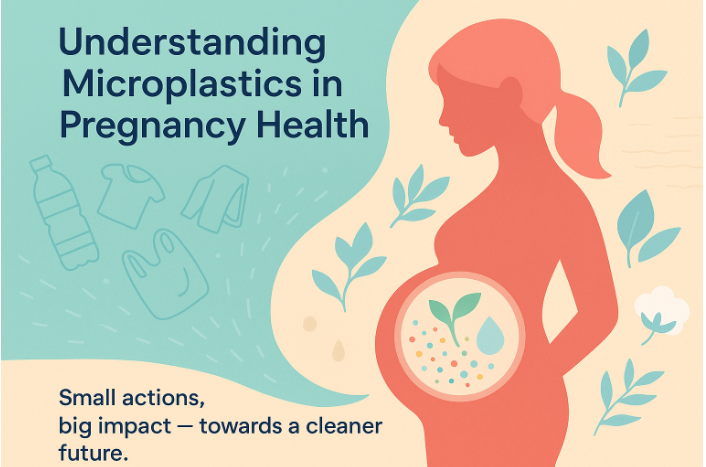
Micro- and nanoplastics (MNPs) are tiny plastic particles that result from the breakdown of larger plastic products, such as packaging, clothing fibers, or synthetic materials. Microplastics are generally smaller than 5 millimeters (smaller than a sesame seed), while nanoplastics are so small they can only be seen under a microscope. These particles have become widespread in our environment—they are found anywhere from the air we breathe, to the food and water we consume, and many of the products we use in our daily lives. 

Everyday items like single-use plastic bottles, food containers, and packaging are major sources of micro- and nanoplastics, both in their production, and after they enter the environment. Other sources include fishing gear, synthetic textiles, […]

2025-11-05T11:38:20+00:0015/10/2025|Science|

The IGEMIS project: expanding the scope of the BiSC study with the analysis of contaminants in fecal samples


The IGEMIS project: expanding the scope of the BiSC study with the analysis of contaminants in fecal samples


We are launching a new project that will allow us to expand BiSC’s research on exposure to chemical contaminants and their effects on child health.

The IGEMIS project (PI25/00751) will study the relationship between exposure to environmental contaminants, the molecular footprints that occur at the gastrointestinal level and their impact on neurodevelopment during childhood. To do this, fecal samples from participants will be analyzed, collected at 18 months of age, a key moment in development when children begin to explore their environment more thanks to mobility, the intake of solid foods and greater hand-to-mouth contact, factors that increase their exposure to environmental contaminants.

One of the great advantages of fecal samples is that they allow for non-invasive collection by the participant; while providing very useful information. Through state-of-the-art technology, a large number of molecules can […]

2025-10-15T13:09:03+00:0001/10/2025|Evolution of the project, Science|

Relationship between the consumption of ultra-processed food during pregnancy and the baby’s brain?


Relationship between the consumption of ultra-processed food during pregnancy and the baby’s brain?


Studies with mice have shown that a high intake of certain components present in ultra-processed foods and drinks —such as trans fats, salt and some additives— can influence brain development during pregnancy. In addition, some scientific evidence suggests that the mother’s food decisions during gestation may offer the fetus an initial exposure to the culinary tastes of the family.

This suggests that ultra-processed products, due to their high palatability and nutritional composition, could act as a relevant stimulus for the developing brain of the fetus. But what is the association between prenatal consumption of ultra-processed foods and drinks and brain development?

To answer this question, the nutrition research group of the BiSC project has analyzed the consumption of ultra-processed foods by mothers during the second trimester of pregnancy. The results show that high consumption is associated with differential development of […]

2025-06-19T08:43:21+00:0002/06/2025|Science|

Shifting to the world of precision medicine. What is a Polygenic Risk Score and why is it important?


Shifting to the world of precision medicine. What is a Polygenic Risk Score and why is it important?


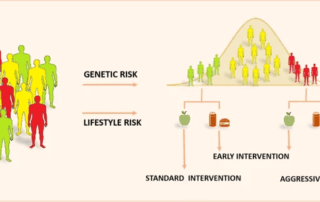
In recent years, we have been hearing more and more about genetics and precision medicine. Not long ago, it seemed like a dream that one could simply take a test and learn about their predispositions to illnesses. But this is becoming a reality thanks to tests that combine socio-demographic factors (ex. age) and clinical data (ex. weight) with polygenic risk scores (PRS) — a value used to estimate a person’s genetic predisposition to certain traits or conditions.

Unlike single-gene disorders, which are relatively rare and caused by mutations in a few genes—most common health problems, such as asthma, type 2 diabetes, heart disease, or pregnancy complications, are influenced by many genetic variants, each contributing a small effect. A PRS works by combining these small effects together, sometimes thousands (or even millions) of genetic markers, […]

2025-05-19T09:23:44+00:0012/05/2025|Science|

The placenta as an early window to understanding brain development


The placenta as an early window to understanding brain development

BiSC researcher Dr. Marta Cosin Tomas has been awarded a prestigious 2024 NARSAD Young Investigator Grant from the Brain & Behavior Research Foundation. The foundation is an international non-profit organization focused on improving the understanding, prevention, and treatment of psychiatric and mental health disorders. The grant, worth $70,000 over two years (2025–2026), will support a pioneering project that studies how the placenta can provide clues about infant brain development, thanks to the participation of families from the BiSC (Barcelona Life Study Cohort) birth cohort.

Although we often think of the placenta as just a transit organ, responsible for transferring oxygen and nutrients from the mother to the fetus, science has discovered that it does much more. The placenta also produces hormones, neurotransmitters and growth factors that regulate brain development, and protects it from environmental stress. For this reason, it is often referred […]

2025-05-12T10:49:00+00:0007/04/2025|Results, Science|

Everyday Exposures: Understanding Non-Persistent Chemicals and Their Impact on Health


Everyday Exposures: Understanding Non-Persistent Chemicals and Their Impact on Health


Non-persistent chemicals are a group of chemical exposures that metabolize quickly and therefore, are not stored long-term in the body. Non-persistent chemical groups include substances like phenols, phthalates, parabens, or organophosphates. These chemicals are commonly found in things like personal care products, food packaging, cleaning agents, pesticides, or fertilizers. In fact, you can probably look around your house and find many examples of these chemicals, including ‘BPA’ (bisphenol A) in canned food linings or reusable plastic containers, ‘parfum’ in scented candles or air fresheners, methylparaben in lotions or shampoos, ‘DEP’ (diethyl phthalate) in plastic shower curtains or nail polish, and chlorpyrifos on non-organic fruits or vegetables like salad greens or apples from pesticide residues. 

These chemicals are widely used because they are cost-effective, convenient, and enhance product performance. For example, phthalates make plastics flexible, parabens act as preservatives […]

2025-04-07T10:19:55+00:0025/03/2025|Science|

Estimating Outdoor and Indoor Temperature Exposure for the BiSC Participants


Estimating Outdoor and Indoor Temperature Exposure for the BiSC Participants

Extreme heat events pose a significant public health risk and are expected to become more frequent and severe as climate change accelerates. Pregnant women are particularly vulnerable to extreme heat, which can have harmful effects on both maternal health and fetal development. To better understand these risks in the BiSC, we estimated outdoor and indoor temperature exposure for our participants throughout pregnancy to assess their impact on health outcomes in the future.

To estimate outdoor temperature, we used a Random Forest model that integrates data from multiple sources, including the outdoor temperature data from meteorological stations, hourly skin* and 2m temperature**, total precipitation, wind components, the height of the land, and greenspace data. [ref] This approach allowed us to generate an accurate temperature estimate map (R2 = 0.98) at a fine spatial (250m) and daily temporal resolution. During the study period, […]

2025-02-26T12:51:36+00:0024/02/2025|Outstanding, Science|

Travel and physical activity during pregnancy


Travel and physical activity during pregnancy

Staying active during pregnancy is important for both the mother and baby. Previous research suggest that for mothers, it can help lower the chances of developing gestational diabetes and gaining too much weight, while for babies, it can reduce the risk of early birth and being born too large. Walking and biking are important ways to stay active in pregnancy. Other studies show that spending time in cars, for example during long commutes, can lead to stress for pregnant women. This means that the design of cities might affect pregnancy outcomes, since some areas are better for walking and biking while others require driving. However, more research is needed to better understand this link.

A new study from Barcelona and San Sebastián shows that visiting parks and nature areas can help pregnant women meet recommended activity levels, especially in early pregnancy (https://doi.org/10.1016/j.

2024-10-14T07:35:51+00:0014/10/2024|Outstanding, Science|

PFAS and indicators of aging and cellular stress: a new study for public health


PFAS and indicators of aging and cellular stress: a new study for public health


At the beginning of April, a new Erasmus student from Italy, Dr. Elisea Tomaino, joined our team to develop their TFM. A new study has therefore been initiated within the BiSC project, under the supervision of Professor Martine Vrijheid, Dr Bethany Knox and Professor of Hygiene and Epidemiology Antonella Paola Agodi and her University research group of Catania, where the student comes from.

The aim we propose is to investigate the existence of an association between the exposure of pregnant women to per- and polyfluoroalkylated substances (PFAS) and the length of telomeres (TL) and the number of copies of mitochondrial DNA (mtDNA-CN) of placental cells.

On the one hand, PFASs are a group of man-made chemical compounds that are used in a variety of industrial and consumer products for their ability to repel water, oil, heat and stains. These […]

2024-07-04T08:28:22+00:0026/06/2024|Science|

Do you know how our hearts work?


Do you know how our hearts work?


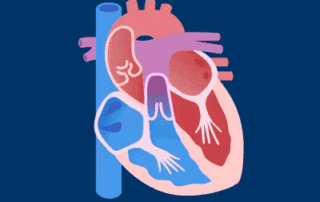
The structure of our heart can be compared to two “one-bedroom apartments” side by side, with four one-way “doors” connecting two “courtyards”: the pulmonary circulation and the systemic circulation. Blood from the body first enters the right atrium, moves through a “door”—the tricuspid valve—into the right ventricle, and then, propelled by the heart’s strong contractions, passes through the pulmonary valve into a small “garden”—the lungs. Here, the blood releases carbon dioxide and other metabolic wastes, absorbs oxygen, and becomes bright red. This oxygen-rich blood then flows into the left atrium, passes through the mitral valve into the left ventricle, and is finally pumped out through the aortic valve to nourish the entire body.

The period from the second to the eighth week of gestation is crucial for embryonic cardiac development, transforming from a simple heart tube into a complex structure similar to an adult heart. […]

2024-06-10T08:44:09+00:0005/06/2024|Science|
Go to Top