Thanks to families: how have we validated a tool to measure child development?

Thanks to families: how have we validated a tool to measure child development?

Understanding how children grow and develop during the first years of life is essential for families, healthcare professionals, and society as a whole. As parents, you observe your child’s abilities, behaviours, and progress every day. These everyday observations are especially valuable during early childhood, a period marked by very rapid development in areas such as movement, communication, learning, emotions, and social interaction. The aim of this study was to ensure that the Developmental Profile-3 (DP-3) you completed accurately reflects children’s development and can be confidently used with families in Spain.

The DP-3 is a parent-reported questionnaire based on caregivers’ knowledge of their child’s everyday behaviours and skills. Although the DP-3 has been used internationally and a Spanish version was already available, it had not yet been independently evaluated […]


The IGEMIS project: expanding the scope of the BiSC study with the analysis of contaminants in fecal samples


The IGEMIS project: expanding the scope of the BiSC study with the analysis of contaminants in fecal samples


We are launching a new project that will allow us to expand BiSC’s research on exposure to chemical contaminants and their effects on child health.

The IGEMIS project (PI25/00751) will study the relationship between exposure to environmental contaminants, the molecular footprints that occur at the gastrointestinal level and their impact on neurodevelopment during childhood. To do this, fecal samples from participants will be analyzed, collected at 18 months of age, a key moment in development when children begin to explore their environment more thanks to mobility, the intake of solid foods and greater hand-to-mouth contact, factors that increase their exposure to environmental contaminants.

One of the great advantages of fecal samples is that they allow for non-invasive collection by the participant; while providing very useful information. Through state-of-the-art technology, a large number of molecules can […]

2025-10-15T13:09:03+00:0001/10/2025|Evolution of the project, Science|

Welcome back BiSC families!


Welcome back BiSC families!


After a well-deserved break during the summer, we are back with our batteries fully charged! We hope you have been able to enjoy these last months, eager to welcome the return of school with open arms.

We have been on vacation, but the project has not stopped. We are now making the last visits of the phase to which many of you have already attended: the in-person visit with the project psychologist, Muriel Ferrer. During this, the children of the project have taught her all the skills they had already learned being already four-year-old: how to jump, play ball, do puzzles, show their short-term memory… and many other activities and tasks.

The four-year visit is coming to an end, but we will soon begin with new phases. Stay tuned for new updates and news!


This news item has been written by Raquel Barneda, field technician for the BiSC project

2025-10-01T08:20:26+00:0025/09/2025|Evolution of the project|

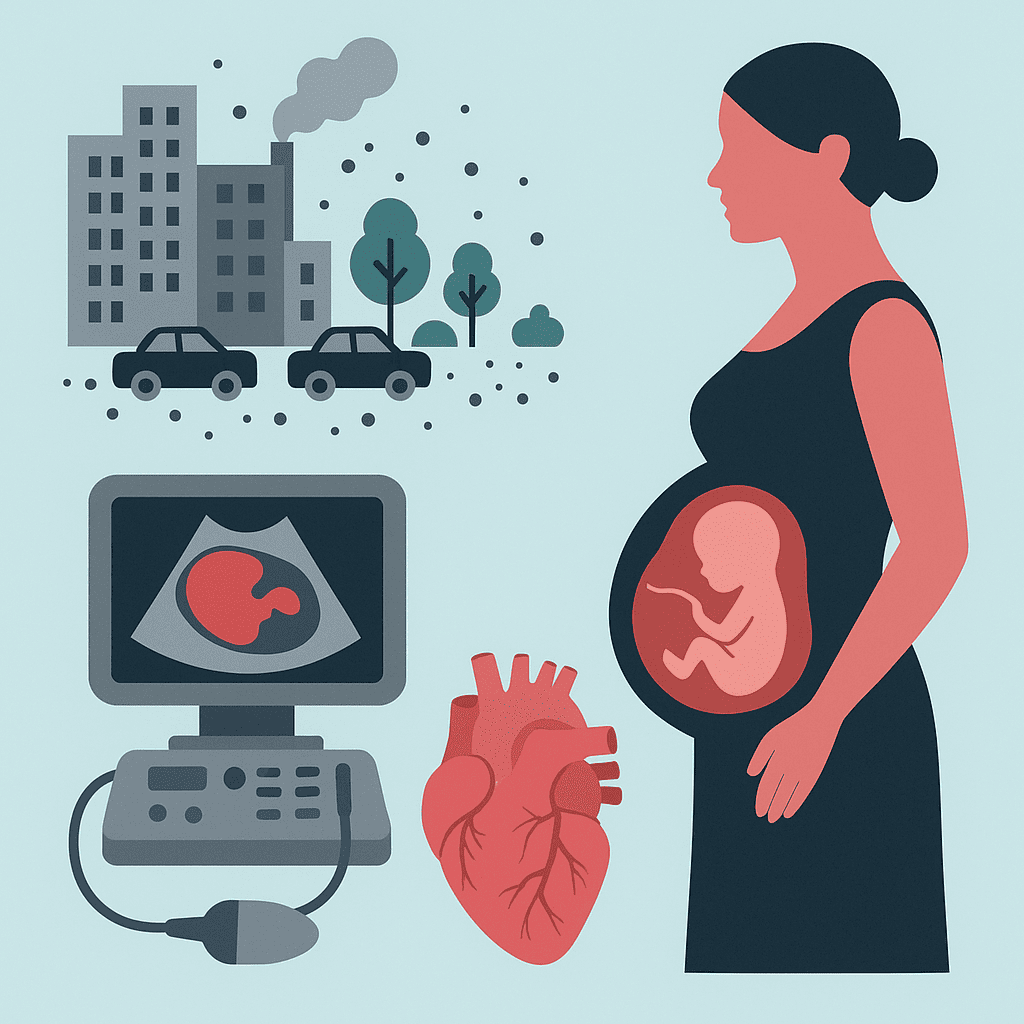
Air Pollution and the Developing Foetal Heart: Investigating Subclinical Cardiac Remodeling in Uterus


Air Pollution and the Developing Foetal Heart: Investigating Subclinical Cardiac Remodeling in Uterus

The prenatal period is a critical window during which environmental exposures may influence the trajectory of organ development. Among these exposures, ambient air pollution—especially nitrogen dioxide (NO₂), particulate matter (PM₂.₅), and black carbon—has been increasingly associated with adverse birth outcomes. However, its impact on fetal cardiovascular development remains insufficiently explored.

Within the framework of the Barcelona Life Study Cohort (BiSC), our research seeks to address this gap by examining how maternal exposure to air pollution during pregnancy may influence fetal cardiac morphology and function. We employ hybrid models that incorporate machine learning techniques (Random Forest) along with time-activity-adjusted exposure metrics to estimate individualized exposures to NO₂, PM₂.₅, and black carbon across various microenvironments, including the home, workplace, and commuting routes.

These exposure estimates are linked to an extensive set of echocardiographic data obtained in the third trimester (around 32 weeks […]

2025-06-02T12:57:56+00:0019/05/2025|Evolution of the project|

We have reached the second half of the 4-year visit!


We have reached the second half of the 4-year visit!

This summer we reached the halfway mark of the 4-year follow-up visit, and we are very happy to report that the participation of the BiSC families is being very active.

As we informed you at the beginning, this visit includes the collection of biological, anthropometric, neuropsychological data, as well as information about health and daily habits. To collect this data, we are contacting you via telephone call when your BiSC children turn 4. During the call, we explain the details of the procedure of the visit and we send you via email or WhatsApp the questionnaires about your own mental and general health. This way you can answer them from the comfort of your own home, taking advantage of a subway ride, during a break at work, or in the park while you watch your little ones play with their new school […]

2024-10-08T11:55:29+00:0001/10/2024|Evolution of the project|

Want to know what BiSC databases look like?

Want to know what BiSC databases look like?

This October, the BiSC project (Barcelona Life Study Cohort) celebrates six years since its beginnig. This project has had the participation of more than 1000 volunteers, who have contributed from the beginning of the pregnancy until today. Over the years, we have collected a large amount of data on various aspects that provide a comprehensive view of child development.

The data obtained cover areas such as lifestyles, exposure to environmental pollutants, omic data (genomics, transcriptomics, metagenomics, among others), as well as mental health and early neurodevelopment of children. These records provide a solid scientific basis for analyzing how these factors can influence the development and well-being of young children.

An essential part of BiSC is rigorous data management. This involves an ongoing process of collection, organization and structuring, ensuring that the data can be properly analyzed to yield valuable scientific conclusions. The […]

2024-10-01T10:16:12+00:0023/09/2024|Evolution of the project|

New Funding for Research on the Placenta and Neurodevelopment in the BiSC Project: Project PERGOLA


New Funding for Research on the Placenta and Neurodevelopment in the BiSC Project: Project PERGOLA

We are pleased to announce that we have secured new funding that will allow us to further research into the role of the placenta in brain development and the early detection of neurodevelopmental complications.

Traditionally, the placenta has been an understudied organ in the context of mental health and neurodevelopment. However, recent evidence suggests that this organ, which connects the mother to the fetus, plays a fundamental role in the regulation of brain development and may significantly influence the risk of neurodevelopmental and psychiatric disorders. The placenta not only supplies essential nutrients and oxygen to the fetus, but is also a highly adaptive organ that protects the fetus from adverse environmental factors, and also acts as a regulator of immune and neuroendocrine functions, affecting brain development from the first stages of pregnancy.

The PÈRGOLA project, thanks to the […]

2024-09-17T10:21:31+00:0006/09/2024|Evolution of the project|

NEW ENDOCRINE DISRUPTOR STUDY COMPLETED: THANKS TO 171 PARTICIPANTS!


NEW ENDOCRINE DISRUPTOR STUDY COMPLETED: THANKS TO 171 PARTICIPANTS!

During these last months, we have been contacting you with the aim to propose you a new optional follow-up visit of the project, the objective of which is to assess the impact of endocrine disruptors on the health of your children. We are pleased to announce that this follow-up has been completed thanks to your cooperation.

Endocrine disruptors are chemical substances that can mimic the action of our natural hormones and cause alterations in the endocrine system, leading to adverse effects on development during childhood and on respiratory, cardiovascular, metabolic, cognitive and reproductive health. We can find ourselves exposed to these disruptors in our everyday life through food, cleaning products, pesticides, cosmetics, etc. Given their involvement in health, more and more research groups are focusing on better understanding these substances.

We want to evaluate the direct impact of endocrine disruptors on the immune […]

2024-09-06T08:30:51+00:0026/07/2024|Evolution of the project|

Fresh news from the BiSC Nutrition Group


Fresh news from the BiSC Nutrition Group


In September we welcomed the new nutrition research group at BiSC, and they already have fresh news to share with you all!

The mother’s diet during pregnancy can be a critical factor in shaping the health of the offspring. For this reason, during the last months BiSC nutrition researchers have focused on characterizing the consumption of ultra-processed foods and drinks in BiSC mothers during pregnancy, and on seeing whether this consumption is related to the data from cognitive development that were collected from your children at 8 and 18 months.

The consumption of ultra-processed foods and drinks has become a widespread phenomenon around the world. But what are they? These are food products that have been subjected to various stages of industrial processing, which generally involve the use of additives, preservatives and other ingredients not common in home cooking. They stand out for their ease of […]

2024-05-13T08:22:37+00:0006/05/2024|Evolution of the project|

Environmental reports on the way!

Environmental reports on the way!

Dear participants, we have started to send you the environmental reports. Let us explain a bit more about what they entail:

What data can you find?

  • Personal exposure to prenatal nitrogen dioxide (NO2) from environmental visits during the 1st and 3rd trimesters of pregnancy.
  • Personal exposure to postnatal NO2 from environmental visits at 6 and 18 months of age of your child.
  • Prenatal noise exposure, also from environmental visits during the 1st and/or 3rd trimester of pregnancy.

Each participant will be able to see the available data from the visits or measures in which they have participated.

In what format will we present the results to you?

  1. Firstly, you will be able to see the prenatal and postnatal personal exposure to NO2, expressed in µg/m3, for each environmental visit.
  2. Next, you will find a graph showing the distribution of postnatal NO2 exposure from all samples, with your concentrations marked. […]
2024-03-04T07:36:23+00:0025/02/2024|Evolution of the project, Participants|
Go to Top