The BiSC 2022 scientific meeting was held on March 11!

Celebration of the BiSC Scientific Meeting 2022

The 2022 BiSC scientific meeting was held on Friday, March 11, a meeting of the entire team and collaborators of the Barcelona Life Study Cohort (BiSC).

Two years after the start of the COVID-19 pandemic, the BiSC team has met again in person. The aim of the day was to bring together the whole team, share the status of the project, its evolution, and encourage the scientific debate on the studies led by the different researchers.

The meeting began with a presentation by the project’s principal investigator, Professor Jordi Sunyer, who recalled the large number of people who have worked to make BiSC possible and the value behind the data collected.

Then, Dr. Mireia Gascón updated us on the status of the project, which has already finished recruiting and has started the 24-month visit. He also reviewed the many associated studies and what the future holds […]
2022-05-13T12:37:46+00:0028/03/2022|Evolution of the project|

The ALTER project will analyze the intestinal microbiota of BiSC children

The ALTER project will analyze the intestinal microbiota of BiSC children

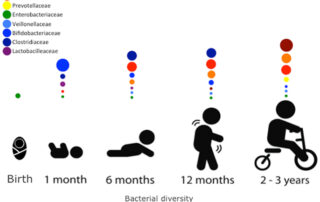
The set of bacteria, viruses, fungi, and other microorganisms that live in a particular habitat make up what is known as a microbiota. We can find microbiota in our environment (in the leaf of a tree, in volcanic rock, in the Arctic ice …), as well as in our organism (in the skin, in the intestine, in the mouth. .). Usually, the relationship between our organism and the microbiota is of mutual benefit (what is known as symbiosis). Sometimes, however, there are certain dysfunctions that can have a negative effect on our health, either because a bacterium that provides benefits is no longer present, or on the contrary, one that causes infections enters our body and causes disease. (e.g., the well-known Salmonella). Similarly, at other times the positive or negative effects depend on the relative amount of certain bacteria […]

2022-03-28T16:59:25+00:0014/03/2022|Evolution of the project|

The BiSC biorepository

The BiSC biorepository

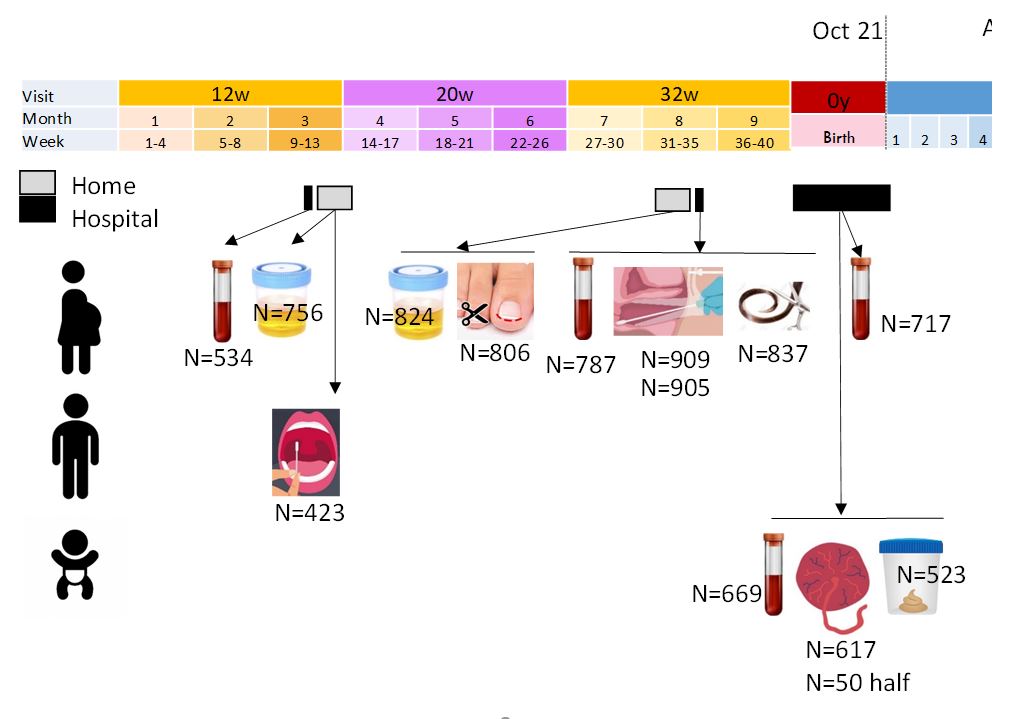
For over two years we have been collecting prenatal and birth samples from BiSC mothers and babies.

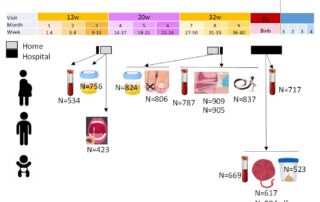
We collected urine, blood, hair, feces, nails, vaginal and rectal samples from mothers. And we also collected meconium, cord blood and baby placentas. The image below shows you the total samples collected.

We are currently inventorying in a computer program the samples we have stored in the freezers of the BiSC biobank. These samples will be used to identify biomarkers of exposure to environmental pollutants, determine their biological response, and the genetics of participants.

Thanks for the effort!

The text has been written by Mariona Bustamante, staff scientist of the BiSC project.

2022-03-07T12:18:45+00:0001/03/2022|Evolution of the project|

Green light for a new visit at 28 months old!

Green light for a new visit at 28 months old!

We are pleased to announce that we are incorporating a new baby monitoring visit for the BiSC Project.

As you all know, the goal of our project is to assess the effect of pollution on children’s neurodevelopment. This development is measured at 8 and 18 months of infants, and now also at 28 months.

This new visit will consist of a questionnaire and the BRIEF test. In addition, we repeat the DP3 and MCArthur tests, which are already sent at 8 months. From this visit you will get results on the neurodevelopment of your children!

2022-02-21T08:11:20+00:0014/02/2022|Evolution of the project|

Placentas road to New York!

Placentas road to New York!!

If you are a BISC volunteer you have probably donated your placenta to the study and you may be wondering where it is now or what became of it and we have to tell you that… They are in New York!

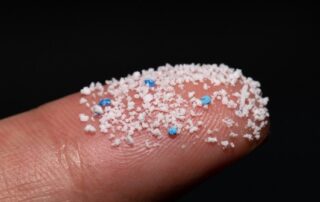
The placenta is a very special organ since it is formed from scratch when implantation begins and is completely expelled during childbirth. Since you have given us this opportunity, we are taking advantage of it! The placentas have traveled to New York where they will be analyzed for the presence of nanoplastics.

And what are nanoplastics or why are we interested? Nanoplastics are particles with a size between 0.001 and 0.1 microns produced due to the fragmentation of […]

2022-02-14T10:57:56+00:0007/02/2022|Evolution of the project|

Let’s start using REDCap!

Let’s start using REDCap!

The BiSC project has been around for a long time. The work done by the whole team is impressive, but there is still a long way to go; and because we want to excel day after day and work in the most productive and agile way possible, we always think of new tools and methods to improve the project.

The amount of data collected from the beginning of the project so far is huge and we are not done yet. That’s why a few months ago we considered migrating all the data collected and stored in other programs to REDCap (Research Electronic Data Capture). REDCap is a web platform for creating and managing databases, widely used in the field of biomedical research. It was created in 2014 by a […]

2022-02-07T08:46:28+00:0028/01/2022|Evolution of the project|

The latest BiSCAPE campaign begins!

The latest BiSCAPE campaign begins!

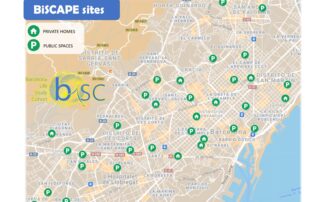
In previous news we have already told you about some campaigns of measures of air pollutants that we are performing at different sampling points in the BiSC study area (BiSCAPE subproject – (Barcelona Life Cohort Study Air Pollution Exposure). During these campaigns, we monitor 34 different locations, making simultaneous measurements at 10-12 points for 10 days ( we do 3 series per campaign).

In total, we will be running 3 campaigns to cover different seasons of the year, as pollutant levels tend to vary depending on the time of year. This Wednesday the 12th of January we are starting the winter campaign, the last one! The campaign lasts approximately one […]

2022-01-28T15:56:23+00:0011/01/2022|Active projects, Evolution of the project|

Cognitive skills study at the 18 months of age

How does the environment affect children’s development?

The BiSC project, in collaboration with the Language Attention, Perception and Acquisition Laboratory (APAL) of the University of Barcelona, ​​aims to go beyond the collection of conventional clinical measures to obtain additional measures of processing and learning.

The study of learning skills is important to determine the needs of each stage of children’s development. This process can be analyzed from different perspectives. One of the directions we’ve taken in understanding these skills is investigating babies’ ability to learn words at 18 months.

Word learning is a foundational skill necessary for later language development. Various factors intervene in it, ranging from the environment in which the baby develops, as well as maturation factors, biological […]

2021-12-20T15:26:32+00:0013/12/2021|Evolution of the project|

We keep installing sonometers!

We keep installing sonometers!

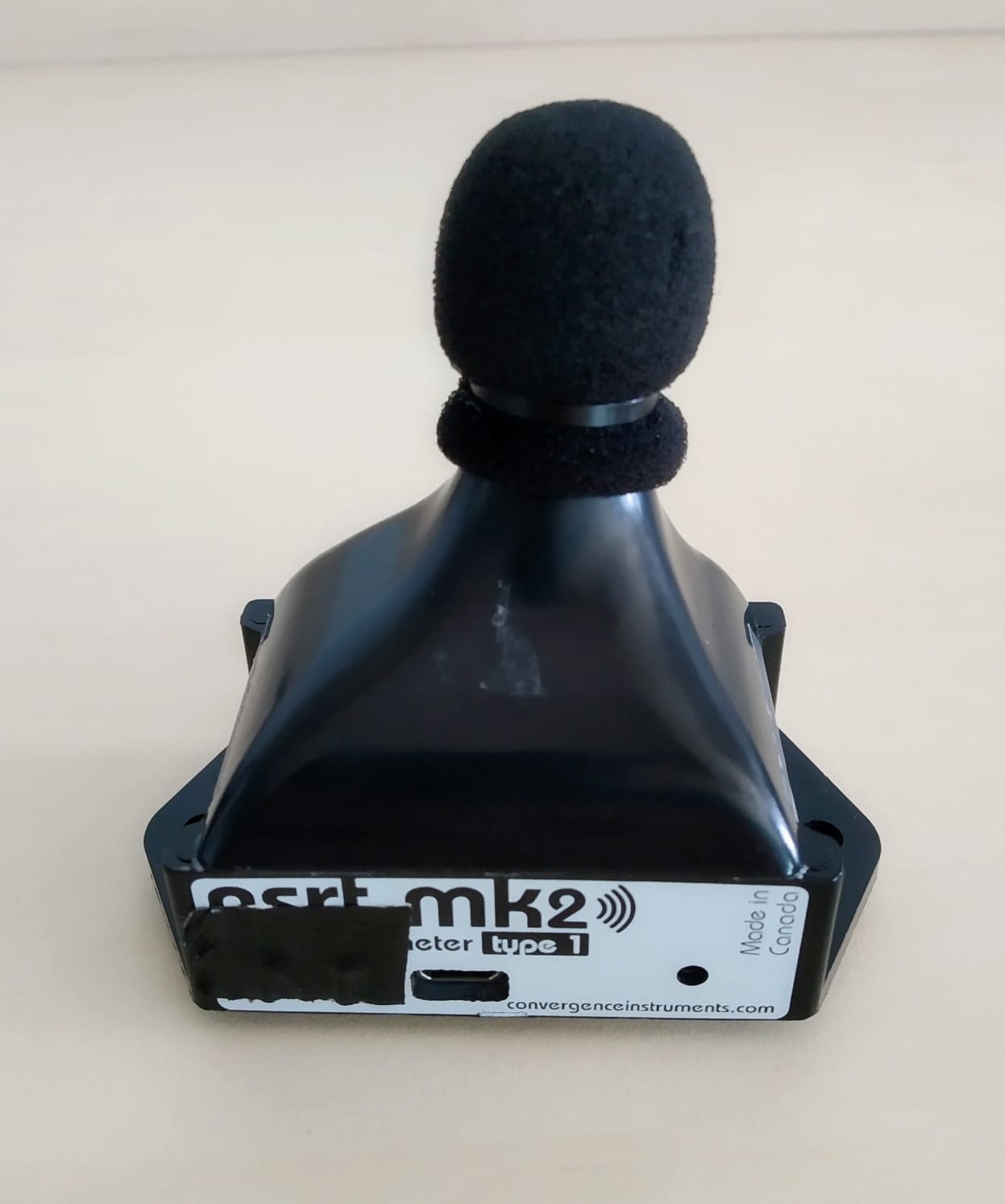
There are already more than 70 sonometers installed! The aim is to obtain measures for noise pollution in the homes of volunteer families, as these data could not be obtained due to confinement. This is why the baby’s 6-month visit is used, which consists of collecting urine and a stool sample from the baby and measuring the child’s exposure to nitrogen dioxide (NO2) through a tube that accompanies her for a whole week.

The sonometer, which is being installed at the volunteer’s residence.
In addition, the measurement of exposure to environmental noise with noise meters is also added for a week. These equipment are installed outside and that is why it is very important to have […]

2021-12-13T12:17:01+00:0007/12/2021|Evolution of the project|

We begin sequencing the microRNAs from the placenta samples from the BiSC project!

We begin sequencing the microRNAs from the placenta samples from the BiSC project!

As part of the BiSC project, placenta samples have been collected on the day of birth. A total of more than 600 mothers’ placenta samples were collected!

Some of the main objectives of the collection of this type of sample are 1) to be able to characterize the molecular profiles of this tissue, 2) to study whether environmental factors such as exposure to air pollution during pregnancy have been able to alter these profiles, and 3) explore whether these alterations can affect the health of the newborn and later the child. To study these molecular profiles, we need to extract RNA and DNA from them. So far in the lab, we have been able to isolate the RNA and […]

2021-11-26T10:06:27+00:0025/10/2021|Evolution of the project, Science|
Go to Top