The BiSC team: critical spirit and commitment to good science

The BiSC team: critical spirit and commitment to good science

Have you ever wondered how our health is shaped or conditioned even before we are born? This question lies at the heart of a fascinating field of research known as the Developmental origins of health and disease. In fact, the BiSC project is part of this field as it wants to explore how our health trajectories are influenced by prenatal and early life factors.

In recent years, however, some scientists in the field, such as our collaborator Gemma Sharp from the University of Exeter in the United Kingdom, have pointed out that this field has traditionally focused heavily and almost exclusively in maternal exposures during pregnancy. This means that it has been assumed that the mother’s health and lifestyle during pregnancy are the most crucial determinants of her child’s future health. It seems that this perspective could be disproportionate and lead to […]
2023-07-03T15:38:52+00:0019/06/2023|Science|

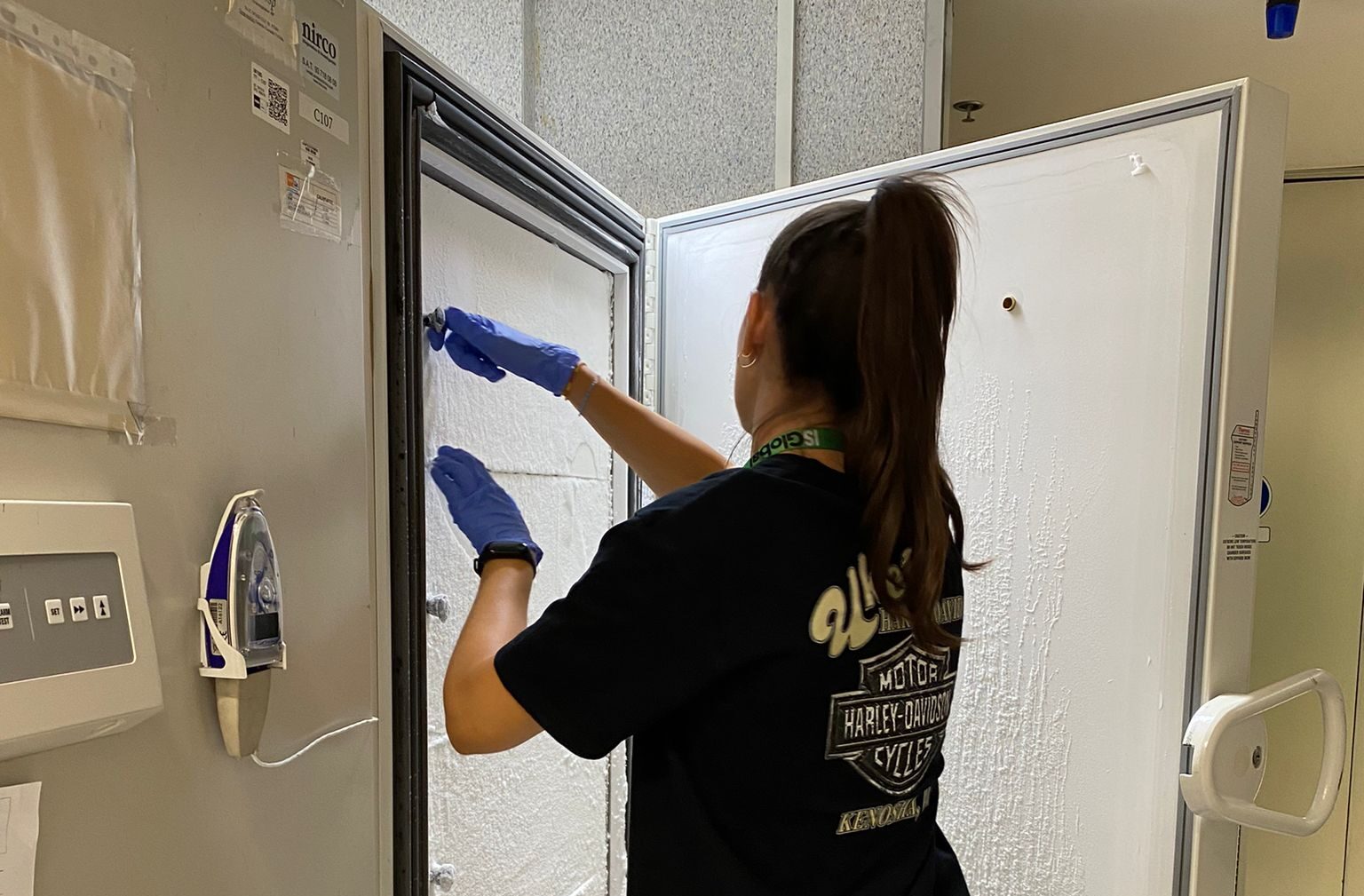
The BiSC biobank stores more than 68,000 aliquots of biological samples


The BiSC biobank stores more than 68,000 aliquots of biological samples


At BiSC we have biological samples of different types, collected from the mother’s pregnancy up to 18 months. On the one hand, we collected samples of urine, blood, hair, vaginal swab, rectal smears and nails from the mothers. From the blood samples we obtained different derivatives: serum, plasma, buffy coat and red cells. The buffy coat, for instance, have served us to extract DNA.

On the other hand, we collected umbilical cord blood, placenta, cord tissue, urine, stools and nails from the baby. From the cord blood samples we obtained different derivatives, and from the placenta we obtained DNA and RNA. Some of them, such as stools and urine, have been collected several times in different visits.

All this means that in the BiSC cohort we have about 68,000 aliquots of biological samples registered! […]

2023-05-22T13:12:33+00:0015/05/2023|Science|

Eyetracking. How do you measure babies’ attention?

Eyetracking. How do you measure babies’ attention?

Understanding the neurocognitive development of babies is based on identifying what they look at, what they interact with, and how they perceive their environment. One of the basic capacities that it uses is visual attention. This is defined as the process, voluntary or involuntary, in which the human brain takes in a large amount of visual data, but pays attention to only a small part. Visual attention is focused on previous experiences and long-term memory expectations.

Hand in hand with neuroscience, the technique of monitoring eye movements or “eye-tracking” allows you to continuously record the baby’s gaze, what she is looking at and what elements call her attention. This allows us to objectively and quantifiably measure her visual attention and her abilities to process visual stimuli at an early stage of her development. Thus, through the analysis of ocular activity and selective attention at each […]

2023-04-18T12:45:41+00:0011/04/2023|Science|

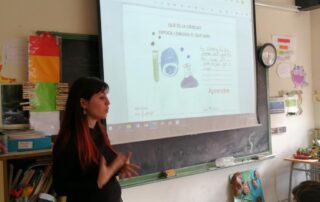
Talking about BiSC and women scientists

Talking about BiSC and women scientists

On February 11, the International Day of Women and Girls in Science was celebrated. As part of our work as researchers, as we have already mentioned in previous news, we also usually carry out dissemination tasks to bring science closer to the public.

In this case, our colleague Neus Rosell participated in a project led by the Barcelona Biomedical Research Park (PRBB) to share with primary school students the reality of the work of a scientist. The talks, which took place in different cities in Catalonia, were aimed at showing other references of scientists while being able to debate with students what science is and, above all, who does it.

Neus Rosell, who regularly participates in scientific dissemination activities, visited the school where she herself had completed her primary studies, and thus talk to the little ones about her own experience. She also spoke about the […]

2023-04-18T12:15:16+00:0008/03/2023|Science|

Sensors: In day-to-day life and in research

Sensors: In day-to-day life and in research

Sensors are everywhere today. A normal smartphone contains more than 10 different sensors. These not only help us go about our day-to-day life but are also becoming more and more useful for doing important research.

The most famous sensor in a smartphone is the GPS sensor. GPS is short for Global Positioning System. This system consists of 31 satellites orbiting the Earth. Each satellite is constantly sending a radio signal with information about its position and the current time. The GPS sensor in your smartphone receives different signals and detects tiny differences in the times they were sent. Four different signals are needed for the phone to estimate its location and the accuracy of the measurement, and since there are 31 satellites altogether the phone will usually pick up around 9 different signals if it is under the bare sky on a cloud-free day. […]

2023-02-21T15:00:06+00:0014/02/2023|Science|

Fetal growth and chemicals

Fetal growth and chemicals

How is BiSC helping to study fetal growth and chemicals with neurosonography and cardiac sonography scans?

Last October, a new predoctoral student joined the BiSC Project under one of the European Union’s Horizon 2020 Research and Innovation programme. Using the detailed and unique sonography measurements taken from BiSC participants, the predoctoral student will study the effects of the chemical exposome on the developing fetus

The ‘exposome’ is a word that researchers use to describe all of the components we are exposed to throughout life. From our environment, our habits and lifestyle, we are exposed to a myriad of chemicals. These chemical exposures come from many different sources (air pollution, cleaning products, pesticides etc.) and we need to know more about how they are affecting our health. The BiSC cohort is helping to study the associations between these chemical exposures during pregnancy and fetal development, […]

2023-02-14T09:18:55+00:0007/02/2023|Science|

Pollution and brain health

Pollution and brain health

In today’s post we want to delve into the effects of pollution on our health from the point of view of other members of the scientific community. Currently, the World Health Organization (WHO) considers pollution the greatest environmental risk factor for human health, being in 2012 responsible for 23% of mortality globally. Over the years it has been possible to establish a strong relationship between pollution and certain pathologies, and its negative effects on the respiratory system as well as the circulatory system have been demonstrated, but nowadays it is increasingly beginning to be seen that other systems, such as be the nervous or digestive, could become affected.

A comment published in the scientific journal Nature by doctors D.A. Cory-Slechta and M. Sobolewski from the Department of Environmental Medicine at the University of Rochester (New York) indicate that pollution plays a role in multiple brain disorders, […]

2023-02-07T13:44:31+00:0031/01/2023|Science|

Getting back to conventional games

Getting back to conventional games

In recent years it has been observed an increase in the use of screens at younger ages. The ease of access to these resources as a form of entertainment and the immediacy of the stimuli that it causes, makes the little ones enjoy them, leaving aside other conventional games.

However, this use can cause an increase in ophthalmological pathologies, as well as difficulties in social interaction and delayed communication and language, with screen play being a unidirectional interaction (from the screen to the child) for which there is no motivation to seek a relationship with others.

That is why we want to remind parents of some games from our childhood that they surely enjoyed and that their little ones will love to know. The fact that the people they love teach them these games promotes greater learning and motivation, due to shared enjoyment and in turn […]

2023-01-31T09:52:07+00:0024/01/2023|Science|

The day-to-day life of a laboratory technician

The day-to-day life of a laboratory technician

At the BiSC Project we often tell you about laboratory technicians, but we haven’t told you how they work and what their role is in BiSC. Well, today we’re sharing a handful of their wide range of tasks.

One of the tasks that our laboratory technicians perform is the preparation, every month, of the kits that are delivered to the mothers for the collection of samples. Once collected, the samples enter the laboratory to be transferred into more suitable containers for handling and conservation. As you already know, when the samples are collected, the parents fill out a form with data related to the collection; for example, the date and time, aspects related to diet, etc. It is a task of the technician to digitize this information.

In parallel, due to the large number and type of samples that we are collecting throughout the study, […]

2022-12-20T17:53:28+00:0013/12/2022|Science|

Environmental pollution, perinatal depression and anxiety

Environmental pollution, perinatal depression and anxiety

At BiSC we collected information on the exposure of volunteers to atmospheric pollution and noise during pregnancy. Also, at 32 weeks of pregnancy and in different postnatal visits we performed the Edinburgh test that assesses the risk of perinatal depression. In the future weeks, we will begin the study to determine if there is any association between exposure to atmospheric pollutants during pregnancy and perinatal depression.

Mental illnesses bear a great burdern of disease and they are often incapacitating for the people who suffer from them. Women have a higher prevalence of depression than men, in women it accounts for at least 20% for depression and anxiety disorders. In the specific case of perinatal depression, which is a depression related to pregnancy and motherhood, this prevalence is around 10 – 15% in Spain.

The role of environmental factors, as air pollution, in mental health is not […]

2022-11-08T10:29:45+00:0003/11/2022|Science|
Go to Top