BiSC WILL ASSESS THE PRESENCE OF “BLACK CARBON” PARTICLES IN THE PLACENTA

Presence of polluting particles in placenta

“Black carbon” is a component present in the smoke of the motors of the vehicles that use hydrocarbons as fuel. These are very small particles (with a diameter of less than 2.5 micrometers) that are produced by incomplete combustion of fossil fuels and are suspended in the air we breathe, entering by air into our body.

Image of the exhaust pipe of a city vehicle.

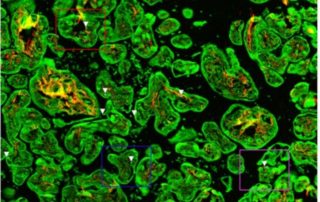
Recently, Dr. Tim Nawrot (from Hasselt University, Belgium), a health and environment specialist, showed the presence of black carbon particles in human placenta samples. It seems that these particles would enter the bloodstream through the capillaries of the lungs, and from there they would reach the placenta.

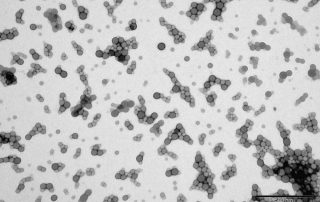
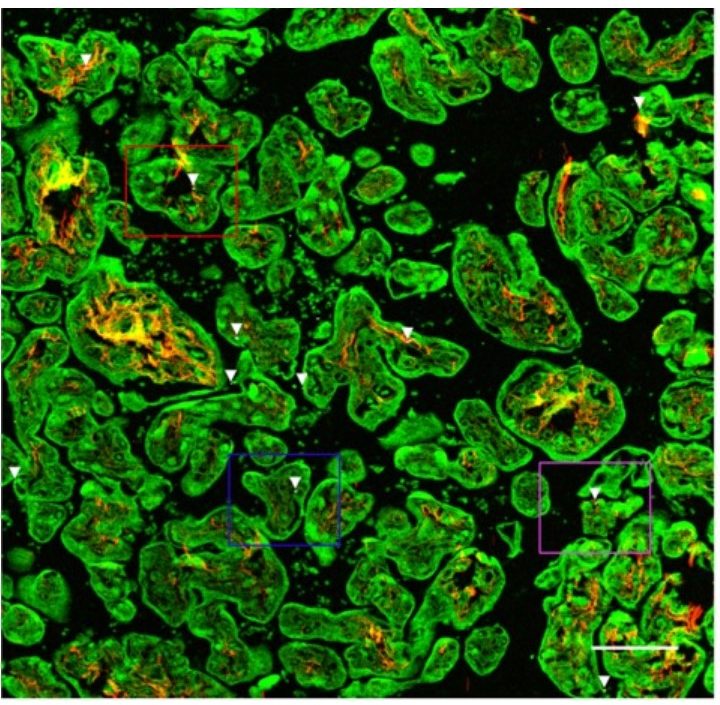
Optical microscopy (pulsatile laser post-illumination) image of a placental biopsy showing the presence of black carbon particles, denoted […]
2020-02-17T11:07:26+00:0010/02/2020|Evolution of the project, Science|

THE LOW-EMISSION ZONE (ZBE) HAS BEEN ACTIVATED – RONDES BARCELONA

The ZBE was activated the past January 2!

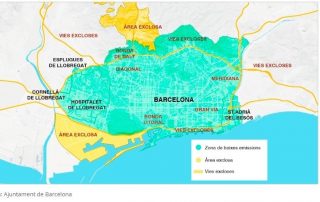
The Barcelona City Council has activated this January 2, an action plan to reduce air pollution from motor vehicles. The ZBE, is a restricted area of ​​more than 95km2 where vehicles that do not have the DGT environmental badge, cannot drive and can be sanctioned from April 1, 2020.

The area that will remain restricted includes the Ronda de Dalt to the Ronda Litoral and part of the Hospitalet de Llobregat, Cornellà de Llobregat, Esplugues de Llobregat and Sant Adrià del Besòs.

The purpose of this restriction is to improve the air quality of the Barcelona area and to begin to face a well-known public health problem. The aim is to reduce NO2 (nitrogen dioxide) and suspended particles emissions by up to 30% over a period of 15 years.

In the following link you can find more […]

2020-01-27T09:01:00+00:0021/01/2020|Science|

We will expand the knowledge about the presence of nanoplastics in human biological samples

We will be collaborating with the Mount Sinai Hospital to study the nanoplastics !

Nanoplastics are small pieces of plastics that measure less than 100 nm in size. They can be divided into two groups; the primary ones, which are manufactured specifically to be used as products; and the secondary ones, which derive from the deterioration of plastics of greater size.

Due to the slow degradation of the plastic polymers, the microplastics accumulate in the middle and end up being absorbed by living organisms, which causes them to accumulate in their tissues. While bioaccumulation in marine organisms has already been established, in humans the evidence is scarce, and it has not yet been determined. 

Detailed picture of seawater contaminated by microplastics (100nm – 5mm). (extracted from the […]

2019-12-09T13:41:15+00:0029/11/2019|Science|

The importance of collecting atmospheric particles in filters

Why do we collect atmospheric particles in filters?

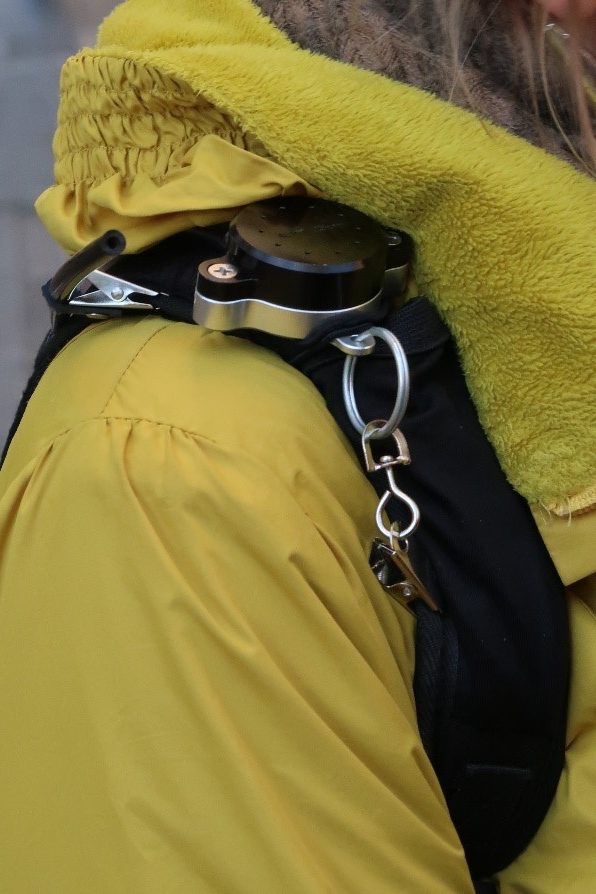
The study participants bring for two days a backpack with several equipment to measure their personal exposure to air pollution. One of these devices is a pump that passes the air through a filter. This filter collects particles less than 2.5 μm (so small that they are not visible to the naked eye) called PM2.5 that are in suspension in the air we breathe.


Image of the particle collector (the filter is inside) installed in the backpack.

But why collect particles in filters?

The filters give us very important information. On the one hand, we can calculate the concentration of these particles in the air. That is, we can quantify […]

2019-11-25T09:19:23+00:0018/11/2019|Science|

Jordi Sunyer, on of the principal investigators of BiSC is interviewed in “Betevé”

We have appearead again in the TV media!

Jordi Sunyer, one of the principal investigators of the BiSC project, is interviewed in BTV after the publication of a Belgian study that has recently discovered that contaminating particles can cross the placenta and reach the fetus. Those news, further evidences the importance of the BiSC study, in which one of whose main objectives is to evaluate whether the function of the placenta can be altered by the presence of particles and, consequently, the development of the fetus.

We leave here the link of the TV report!


The text was written by Mar Álvarez, a project manager of BiSC.

2019-10-15T16:08:50+00:0030/09/2019|Science|

Air pollution: one more reason to participate

Citizen participation to reduce air pollution

There are many news that reach us from different media, evidencing the importance of public health projects.

In September 6, the latest air quality evaluation report, prepared by the Public Health Agency of Barcelona, ​​was presented, stating that “a minimum of 351 people have lost their lives in the capital of Barcelona due to an excess of particles PM2.5 (linked to traffic) in 2018 “, a figure equivalent to that of 2017.

In addition, the results obtained during 2018 in Barcelona show that at present they are still surpassing the levels WHO reference for nitrogen dioxide (NO2) and for particulate matter (PM10 and PM2.5) in the capital. The report also highlights that chronic exposure to high levels of pollution contributes to increasing respiratory and cardiovascular diseases, lung cancer and mortality.

These figures and data do not leave us indifferent. […]

2019-10-15T16:09:06+00:0025/09/2019|Science|

Particle associated to traffic related air pollution can cross the placental barrier

Particles assocaited with traffic air pollution have been found in the placenta of pregnant women

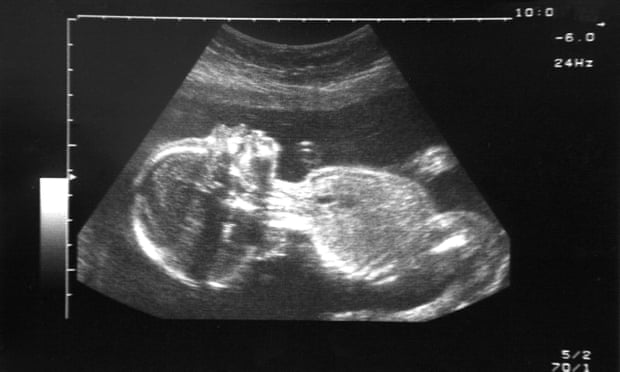
The finding of air pollution particles in fetuses indicates that babies are directly exposed in the uterus to black carbon emitted by fossil fuel engines. This study is the first to show that the particles that the mother breathes can cross the placental barrier. The discovery is of the utmost importance, since the fetus is very vulnerable and the damages it may suffer have lasting consequences.

In the BiSC project, the placenta is one of the biological samples that are being collected, in order to study,  the presence of these particles in an organ as essential for the development of the fetus as is the placenta, among others.

In this link, we find […]

2019-09-30T10:28:14+00:0023/09/2019|Science|

BiSC project in the third edition of the “L’Hospital viu, viu l’hospital”

The BISC study was on the front line in the 3rd edition of the “Hospital viu, viu l’hospital” in “Sant Joan de Déu”

On June 20, the third edition of the “Hospital Viu, viu l’Hospital” conference took place at the “Hospital Sant Joan de Déu”, whose objective was to publicize the new and unique programs and activities carried out in the hospital and the affiliated centers. 

The BISC study was on the front line!

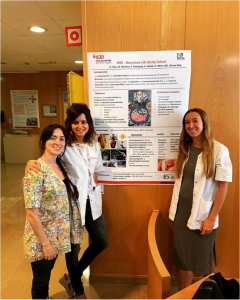
The doctors Giulia Casu and Marta Muniesa with the nurse Estela Rodríguez presenting the poster of the BISC study.

“Sant Joan de Déu Hospital” is one of the three centers involved in the project and today has already attended the delivery of more than 40 participants! 

It is essential that volunteers give birth at the “Hospital Sant Joan de Déu”, at […]

2019-09-02T14:23:52+00:0023/08/2019|Science|

Urban environment and collective health

“Sustainable, healthy and resilient cities

Collective health is determined by the complex interaction of different factors, among which we can find the environment where we live. In the last years, we have been able to observe how the press fills their newspapers about the relationship between them.

Knowing that the quality of the air in Barcelona is a conditioning factor for our health is something that most of the population already knows. However, knowing that this environment is also a promoter of more or less healthy lifestyles is not so obvious, even though it is an essential fact to create healthy cities.

For example, the introduction of bike lanes is intended to encourage the use of this form of transport, or the presence of public parks and gardens that invite the population to take a stroll which stimulates a less sedentary life. In contrast, […]

2019-07-05T12:57:42+00:0017/06/2019|Science|

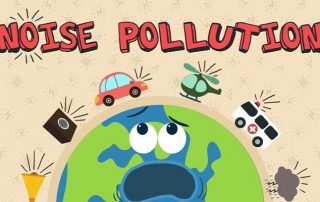
Noise: one of the environmental factors assessed in BiSC

“Noise: Much More than a Nuisance”

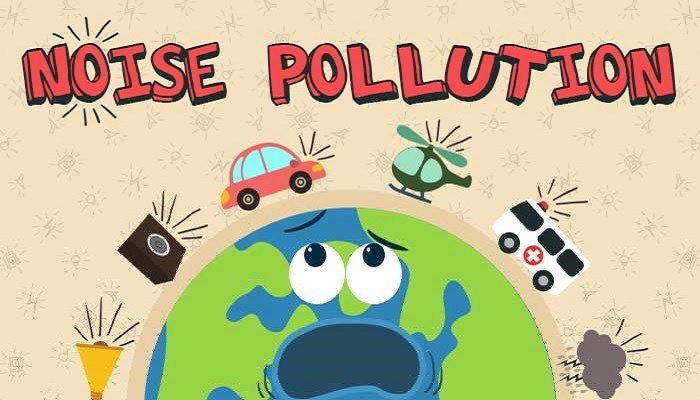
In the following link, our partner of BISC,  Maria Foraster explains the effects of the noise on the health, which is one of the environmental factors with air pollution, that cause the most harm to human health.

Link to the news, published in ISGlobal website.

2019-06-17T14:25:13+00:0031/05/2019|Science|
Go to Top